
Blog
The Cookie I Can’t Eat: How a Handmade Biscuit Keyring Became My Quiet Anchor in a Restless Europe

To anyone else, it is just a scuffed cookie bag charm swinging from the strap of my canvas tote. The edges are worn soft as old leather, the hand-painted lines that once mimicked baked cracks have faded to a doubtful ivory, and a hairline fracture splits its middle like the delta of a dried-out river. I have never given it a proper name. It is simply the biscuit, a handmade biscuit keyring shaped by a child’s fingers twenty-three winters ago on the Danish island of Møn.
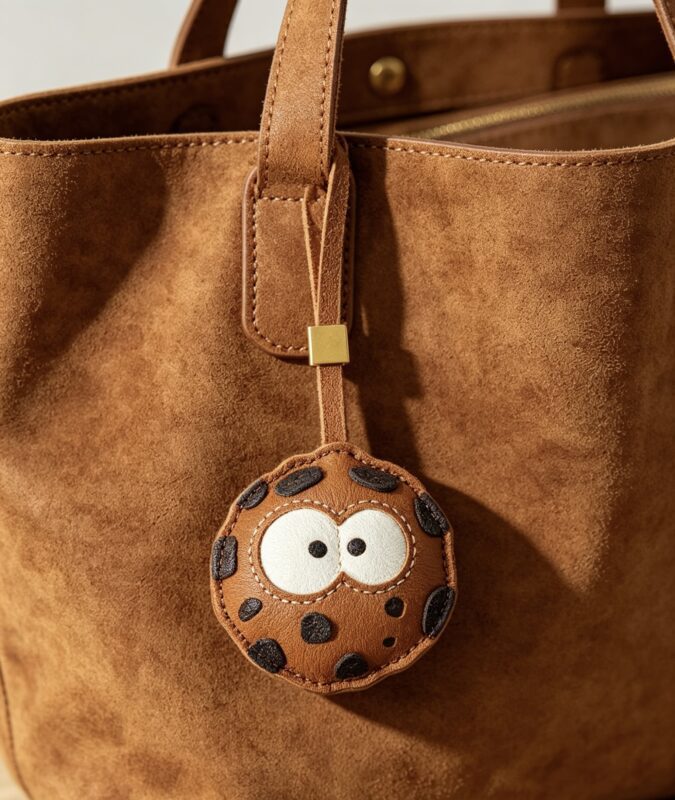
That sleet-grey afternoon, my mormor was baking vaniljekranse, the butter-rich wreath cookies that smell like a promise, and I was allowed to work the leftover dough. I pressed it flat, indented shallow dots with a toothpick to imitate the perforations of a factory biscuit, and refused to let it go into the oven. Mormor, patient as a winter dusk, glazed my raw disc with clear varnish from her craft drawer instead, threaded a thin leather cord through a hole we pierced together, and hung it on the zipper of my school rucksack. I was eight, and in my mind I had created an edible-looking bag accessory so convincing that the seagulls would surely chase me.
That textured cookie key fob has now migrated across six European capitals. It has dangled from backpacks in Copenhagen’s Nørrebro, survived downpours in Brussels’ Marolles, and collected the fine black dust of the U8 line in Berlin. It holds no monetary value, yet it is the first thing my fingers search for when the metro jolts and the city presses a little too close. In the clinical language of wellness, you might label it an emotional support charm, the sort of unique bag charm for adults that asks nothing except to be clutched. I just think of it as the crumb of home that refused to be digested by time.
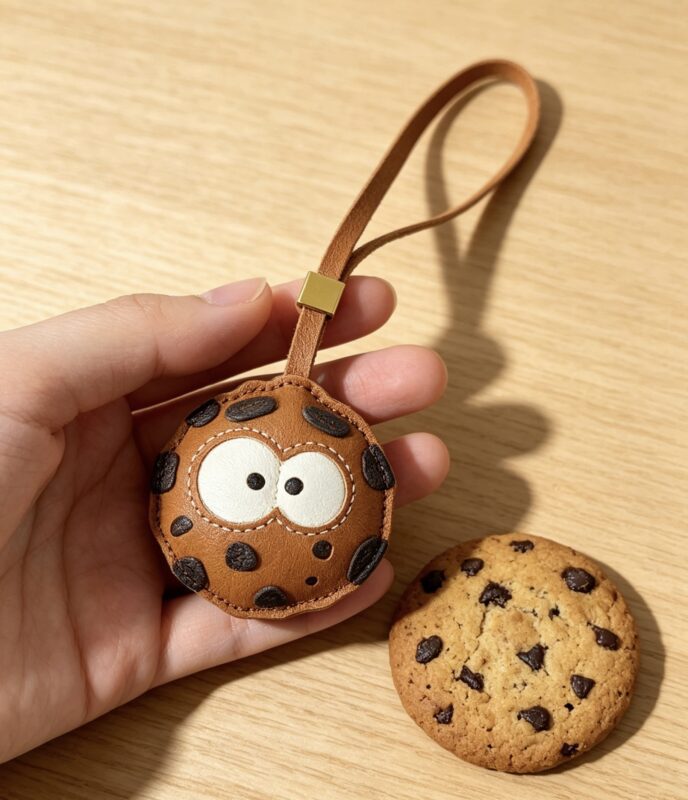
Europe talks often of roots, but it also talks of mobility. My generation moves for degrees, for contracts, for love or the withering of love, and each relocation demands a brutal editing of possessions. This slow fashion trinket always survives the cull. It weighs less than a memory, but it carries the specific gravity of a butter cookie ornament made by a child who didn’t yet know what leaving meant. I don’t carry it out of nostalgia tourism; I carry it because the past is not a country I visit, but a dialect I still speak, and this charm is my tongue.
Strangers occasionally smile at it, proving that in a continent that quietly adores quirky bag accessory Europe actually notices and respects. A Danish woman once tapped my shoulder on the S-tog and said, “That looks like a biscuit my bedstemor would have kept in a tin.” I couldn’t tell her it was more than a childhood snack keepsake; it was a vintage cookie keychain that had aged alongside my own skin, a whimsical cookie keyring made of flour, water, salt, and a child’s obstinate love. What I managed was, “It is. But you can’t eat it.” She laughed, and in that brief spark, two strangers shared a grandma’s cookie tin memory without ever opening a lid.
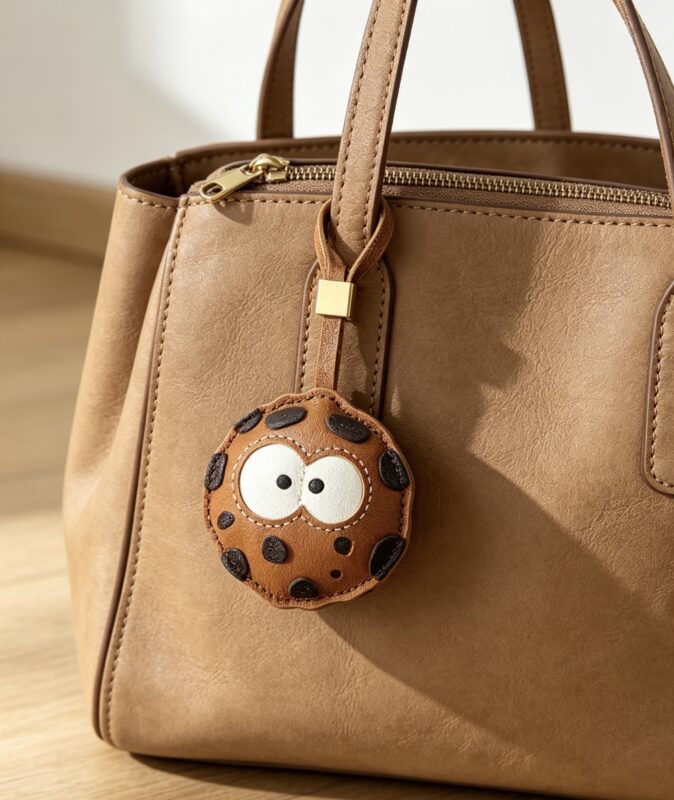
Of course, the quilt of nostalgia has its frayed edges. Mormor no longer remembers my name. When I visit her care home outside Vordingborg, I wear the nostalgic bag accessory high on my shoulder, a small, silent broadcast of identity. I don’t show it to her; that would be a test, and love should never set tests. Yet afterwards, in the stark bus station, I press the cracked surface to my lips and it is not a fake biscuit I taste but the ghost of butter and the warmth of a kitchen where I was once fully known. Psychologists speak of olfactory memory, and I have come to see this object as a form of scented memory jewellery — the scent is entirely constructed by my brain, but aren’t the truest scents always invisible?
The charm embodies what I think of as Danish butter cookie nostalgia, a longing not for sugar and wheat but for the safety that saturates a room when someone patient is measuring flour. It defends itself against the algorithm, this tiny rebellion of the handmade. You cannot scroll to this feeling. You cannot add it to a cart. This simple cookie charm bag accent has taught me that the most permanent things are often the most fragile, and that keeping a piece of childhood clipped to your everyday bag is not childish — it is a form of survival.
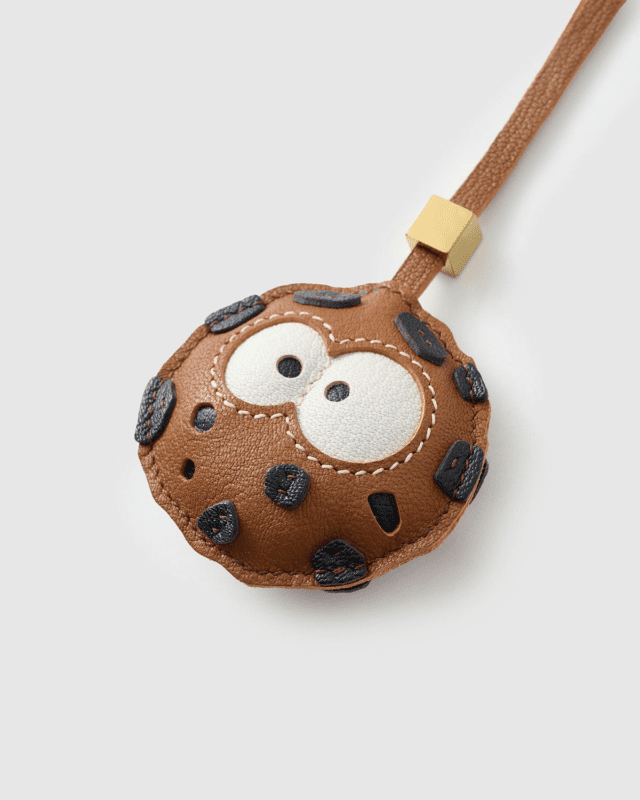
Late at night, in a rented room that smells of radiator paint and someone else’s cooking, I clean the cookie bag charm with a damp cloth, tracing the crack that has never deepened. It still holds. I think of the North Sea grinding chalk cliffs into dust, of my mormor’s hands pressing dough into wreaths, of the cord we pierced when I believed that a string could outlast a decade. It has. This trinket is my butter cookie ornament, my edible-looking bag accessory that feeds nothing but the soul, my quiet anchor in a restless Europe that spins its young people across borders like dandelion seeds. I do not need it to be worth anything. I only need it to keep swinging from my bag, a pendulum that counts not seconds, but the steady, unsweetened rhythm of being alive and remembered.🍪🍪🍪
A biscuit that feeds nothing but the soul.🍪👇👇👇